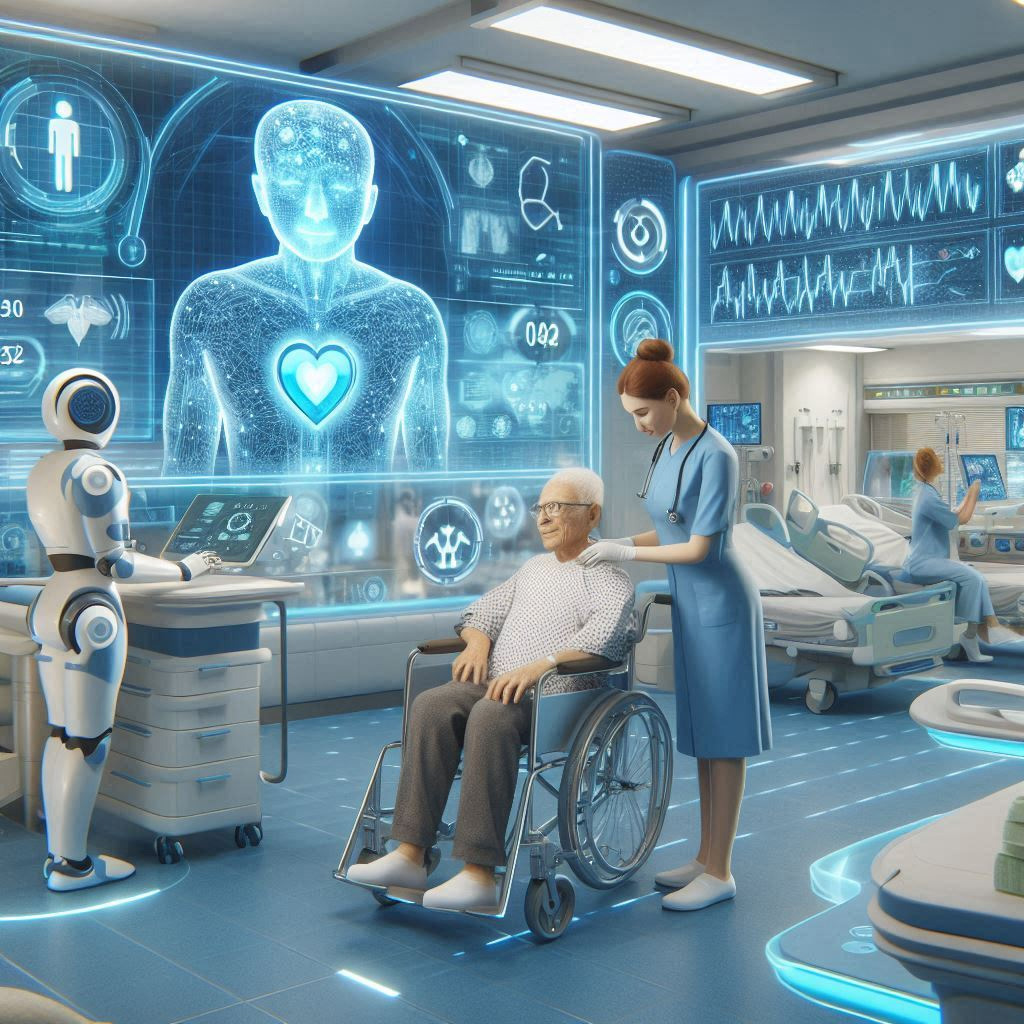
Artificial Intelligence (AI) has made significant advancements in various fields, including healthcare. With the rapid developments in AI technology, the potential for AI to assist in providing care for individuals has become increasingly apparent. From personalized treatment plans to remote monitoring, AI is revolutionizing the way healthcare is delivered.
One of the key ways in which AI is assisting in care is through the analysis of large sets of patient data. AI algorithms have the ability to process and analyze vast amounts of data much faster and more efficiently than humans. This enables healthcare providers to identify patterns and trends that may not be immediately apparent, leading to more accurate diagnoses and treatment plans.
Additionally, AI-powered tools are being used to personalize treatment plans for patients. By analyzing a patient’s unique genetic makeup, medical history, and lifestyle factors, AI can help healthcare providers develop tailored treatment strategies that are more effective and precise. This personalized approach has the potential to improve patient outcomes and reduce the likelihood of adverse reactions to treatments.
Another area where AI is making a significant impact is in remote monitoring and predictive analytics. Wearable devices and monitoring systems equipped with AI capabilities can continuously track vital signs and other health metrics, providing real-time data to both patients and healthcare professionals. This continuous monitoring allows for early detection of potential health issues and the ability to intervene proactively, ultimately improving patient care and reducing the likelihood of hospital readmissions.
AI is also being leveraged to improve operational efficiency within healthcare facilities. From automating administrative tasks to optimizing resource allocation, AI-enabled systems are streamlining processes and enabling healthcare providers to focus more on direct patient care.
While the potential benefits of AI in healthcare are significant, it’s important to recognize that AI is not intended to replace human healthcare professionals. Rather, AI should be viewed as a powerful tool to support and enhance the capabilities of healthcare providers, ultimately leading to better patient care and outcomes.
In conclusion, the integration of AI into healthcare has the potential to revolutionize the way care is delivered, from personalized treatment plans to remote monitoring and predictive analytics. As AI technology continues to advance, its role in assisting care will become increasingly important, improving patient outcomes and enhancing the overall healthcare experience.